
In the TV series 1883 (the prequel to Yellowstone), it is mentioned that Lakota Indians submerged arrowheads in manure in order to inflict even deadlier wounds on their enemies.
The idea is brilliant: the bacteria in the manure would almost certainly cause Sepsis (if the victim would still be alive), and in an age without antibiotics Sepsis means certain death. Unfortunately, it is debated whether some Native American tribes actually had this custom, but that doesn’t mean they couldn’t very cruel to each other nonetheless.
The Iroquois, for example, did not shy away from massacres in which hundreds of men, women and children of neighboring tribes (such as the Huron) were slaughtered and mutilated (cf. — example given [involving other tribes] — the Crow Creek site in South Dakota).
Just like the Iroquois, the Huron were known for torturing (male) captives for hours and even days, through cutting off body parts (to mention one technique). Sometimes victims who showed real courage were left alive, and even adopted by the tribe (there’s often a silver lining in a cloud, but this particular cloud rained blood).
And general mutilation of living victims — most infamously scalping, but also cutting off fingers, noses and genitals — was widespread amongst North Native-American tribes (and meant to disable the victims in the afterlife besides the obvious torturous aspect).
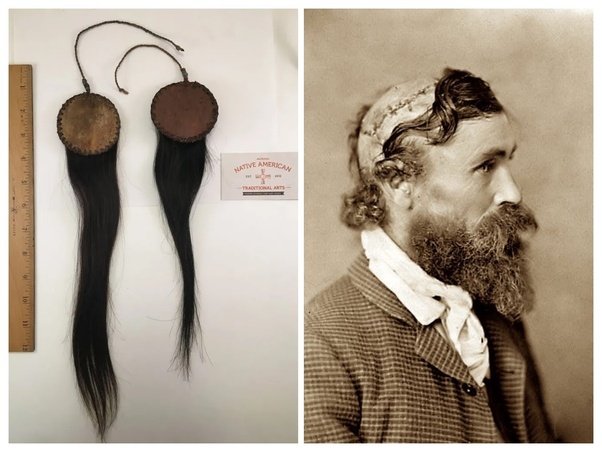
The man in the collage above is Robert McGee. He miraculously survived a Sioux attack in 1864 in which he was shot, struck by arrows, wounded by a tomahawk and then scalped. Admittedly, he was not Native American —
But Native Americans did not discriminate when it was time to pick a fight.


0 Comments