
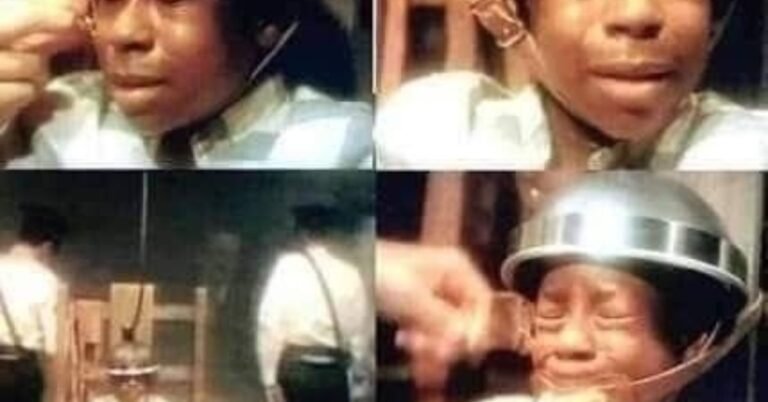
In 1944, in the small town of Alcolu, South Carolina, a heartbreaking and shocking event took place that would later become one of the darkest chapters in American history. George Junius Stinney Jr., a 14-year-old African American boy, was accused of a crime he did not commit — and was executed for it.
The Crime and the Accusation
Two young white girls, 11-year-old Betty June Binnicker and 7-year-old Mary Emma Thames, were found dead in a ditch near the Stinney family’s home. The girls had been beaten to death with a heavy railroad spike or a large metal beam that weighed more than 40 pounds.
Earlier that day, the girls had reportedly asked George and his younger sister, Katherine, if they knew where they could find a certain type of flower. That was the last time anyone saw the girls alive.
When their bodies were discovered, suspicion immediately fell on George — not because of any evidence, but because he was a young Black boy living in a deeply segregated Southern town.
The Arrest and Interrogation
Police arrested George Stinney Jr. without his parents present. He was taken away while his family was forced to leave town under threats of violence from white residents. George’s parents were never allowed to visit him in jail.
During his interrogation, George was alone — without a lawyer, without family, and without any protection. Police later claimed that he confessed to the murders, but there was no written record of any confession, and no evidence was ever presented to prove it.
The Trial
The trial of George Stinney Jr. was shockingly short. It lasted only two hours. The jury — made up entirely of white men — deliberated for just 10 minutes before finding him guilty of murder.
No witnesses were called in George’s defense, and his court-appointed attorney did nothing to challenge the prosecution’s claims. George’s parents were not allowed to attend the trial or say goodbye to their son.
The Execution
George spent 81 days in prison before being executed in the electric chair on June 16, 1944. He was so small that he had to sit on a Bible to reach the height required for the electrodes. Witnesses said he held a Bible in his hands the entire time, proclaiming his innocence until the end.
When the switch was pulled, 5,380 volts of electricity surged through his tiny body. The force was so strong that the mask covering his face slipped off, revealing his tear-streaked face to the witnesses in the room.
George Stinney was just 14 years old.
The Truth Comes Out
For decades, people spoke about the injustice of George Stinney’s case. In 2014 — 70 years after his death — a South Carolina judge officially overturned his conviction, declaring that Stinney had not received a fair trial.
Experts revealed that the murder weapon, a 40-pound iron beam, would have been impossible for a 14-year-old boy of George’s size to lift, let alone use to kill two people. There was no physical evidence linking him to the crime. His “confession” was found to have been coerced under fear and intimidation.
George Stinney was innocent.
Legacy and Reflection
The case of George Stinney Jr. stands as a painful reminder of the deep racial injustice that plagued — and still affects — the American legal system. His story inspired many works of art and literature, including Stephen King’s novel The Green Mile, which tells the story of an innocent man sentenced to die in the electric chair.
People often say that the past was more humane or simpler, but George’s story proves otherwise. Cruelty existed then just as it does now — the difference is that, today, the world can see it.


0 Comments