
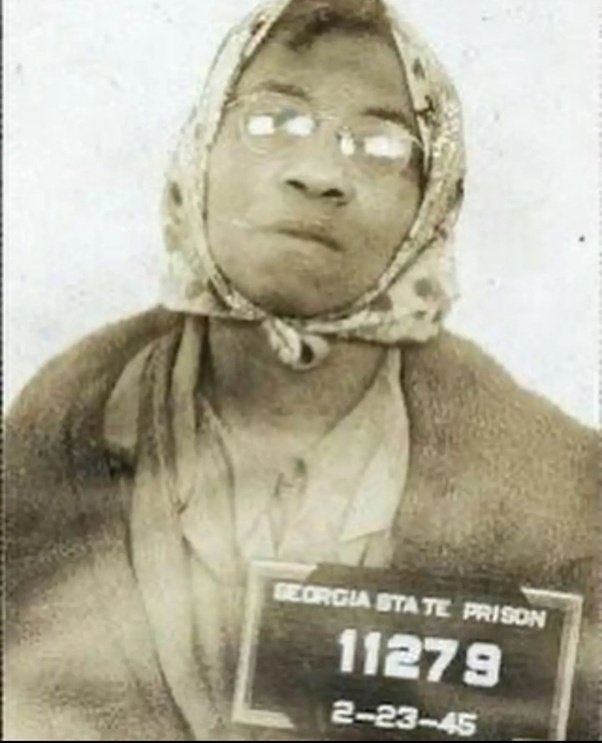
Lena Baker (June 8, 1900 – March 5, 1945) was a Black maid in rural Georgia whose life ended tragically in the state’s electric chair, making her the only woman ever executed by Georgia. Her conviction stemmed from the 1944 killing of her white employer, Ernest Knight, whom she claimed had imprisoned and attempted to rape her. Despite her pleas of self-defense, an all-white, all-male jury convicted her of capital murder after a trial that lasted just one day. Sixty years later, in 2005, the state granted her a posthumous pardon, acknowledging systemic racism and flaws in the justice system.
Background and the Incident
- Early Life: Born in Cuthbert, Georgia, to a family of sharecroppers, Baker grew up in poverty. By the 1940s, she was a single mother of three children, working menial jobs to support them.
- Relationship with Ernest Knight: Knight, a local gristmill operator in his 60s or 70s, hired Baker as a maid and caregiver after he broke his leg. Witnesses later described Knight as abusive and alcoholic. Baker testified that Knight held her against her will in his mill for days, beating her and threatening her life if she tried to leave.
- The Killing (April 29, 1944): According to Baker, Knight attacked her with a metal bar and attempted to rape her. During a struggle over Knight’s pistol, the gun discharged, killing him with a single shot to the head. Baker fled and turned herself in to the sheriff, insisting it was self-defense.
The Trial and Execution
- Trial Date: August 14, 1944, in Randolph County Superior Court.
- Key Details:
- Jury: 12 white men (Black people and women were excluded from juries in Georgia at the time).
- Duration: Less than 8 hours, including testimony, arguments, and deliberation.
- Defense: Baker’s court-appointed attorney called no witnesses and presented minimal evidence. Baker was the primary witness, recounting abuse and the struggle.
- Prosecution: Portrayed Baker as a jealous lover who killed Knight in a fit of rage, ignoring her claims of imprisonment.
- Verdict: Guilty of capital murder; automatic death sentence (no sentencing phase).
- Appeals: Denied by the Georgia Supreme Court.
- Execution: March 5, 1945, at Georgia State Prison in Reidsville. Baker, aged 44, was strapped into “Old Sparky,” the electric chair.
- Last Words: “What I done, I did in self-defense, or I would have been killed myself. Where I was I could not overcome it. God has forgiven me. I have nothing against anyone… I am ready to meet my God.”
- Aftermath: Her body was buried in an unmarked grave near her church. Her three children were left orphaned.
Posthumous Pardon and Legacy
- Campaign for Justice: In the 2000s, Baker’s grandniece, Roosevelt Curry, and the Georgia Prison Museum led efforts to re-examine the case. They highlighted:
- Racial bias in the Jim Crow-era South.
- Lack of due process (one-day trial, no Black jurors).
- Corroborating evidence: Knight’s son admitted his father had threatened Baker with a gun days earlier; neighbors heard screams from the mill.
- Pardon: On August 30, 2005, the Georgia Board of Pardons and Paroles issued a full pardon, stating: “The decision was based on the conviction that Baker should have been charged with voluntary manslaughter, which carried a sentence of 15 years, rather than capital murder.”
- Memorials:
- A headstone was placed on her grave in 2001, reading: “Wrongly Convicted – Pardoned 60 Years Later.”
- Her photograph and last words are displayed near the retired electric chair at the Georgia Prison Museum in Reidsville.
- In 2003, a historical marker was erected in Cuthbert.
Broader Context and Sources
This case exemplifies racial and gender inequities in the 1940s U.S. South, where Black women alleging rape by white men faced near-certain conviction. Similar cases include the Scottsboro Boys and Recy Taylor.
Key Sources:
- Georgia Board of Pardons and Paroles official pardon document (2005).
- “The Lena Baker Story” (2001 book by Lela Bond Phillips; basis for 2008 film The Lena Baker Story starring Tichina Arnold).
- Atlanta Journal-Constitution archives (1944–1945 trial coverage; 2005 pardon reports).
- NAACP and Southern Poverty Law Center historical reviews.
Lena Baker’s pardon came too late for justice in her lifetime but serves as a reminder of the human cost of systemic bias. Her story continues to be taught in discussions of civil rights and criminal justice reform.


0 Comments