
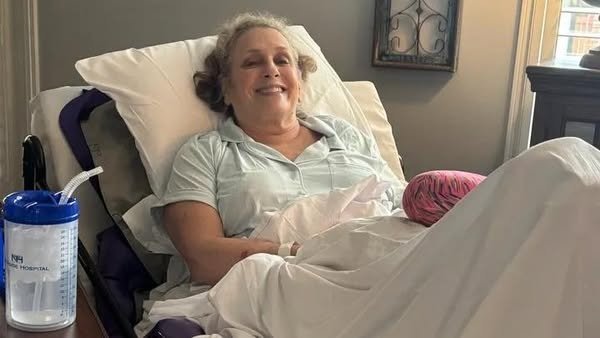
Just fifteen minutes from a long-awaited date night with her husband, Carole Townsend’s life changed forever.
The couple was driving through Gwinnett County when another car slammed into theirs. Her husband, Marc, walked away with only minor injuries. But Carole was not so lucky.
Both of her legs were broken in several places. Her kneecaps shattered. Several ribs fractured. One hand crushed. In the weeks that followed, Carole endured four major surgeries and a month in the hospital.
Now 64 years old, she is bedridden, unable to stand, and facing at least three more months before doctors say she can even try to walk again.
But perhaps the most devastating part of her ordeal didn’t come from the crash itself — it came from what happened after.
“They Told Me I Was on My Own”
Despite having both health and auto insurance, Carole was told that she would be discharged home without the support her doctors said she needed.
No home nurse.
No physical therapy.
No medical transport.
No assistance in making her home accessible for her recovery.
“They told me I was on my own,” she said. “It was unbelievable — I thought, how can this be?”
The reason, she soon learned, lies in a quirk of Georgia law that treats car crash injuries differently from other types of trauma.
If Carole had fallen at home and sustained the same injuries, her health insurance would have covered her rehabilitation, in-home care, and necessary equipment.
But because her injuries came from a motor vehicle accident, those costs shift to the auto insurance system, which is not designed to cover ongoing medical or rehabilitative care.
A Hidden Gap in the System
It’s a distinction most Georgians don’t know about until they experience it firsthand.
Under Georgia law, car accident victims often find themselves in a coverage gap, caught between health and auto insurance — each pointing to the other as responsible.
The result: thousands of residents each year are forced to pay out of pocket for essential recovery services, even when they’ve done everything right — paid their premiums, carried insurance, and followed the rules.
Carole calls it a cruel and intentional flaw in the system.
“People don’t realize how unfair the laws are in a motor vehicle accident,” she said. “It’s intentional. The system is written this way — and it leaves people broken, not just physically, but financially and emotionally too.”
Speaking Out for Others
From her hospital bed, Carole is trying to focus on healing. But she’s also determined to make sure others don’t go through what she’s facing.
She’s begun speaking out about Georgia’s insurance laws, hoping her story will spark change.
“I don’t want sympathy,” she said. “I want awareness. Because if this can happen to me — with insurance, with doctors, with support — it can happen to anyone.”
Her recovery will be long, and her road uncertain. But Carole believes shining a light on this hidden injustice may help others find a safer path forward.


0 Comments