
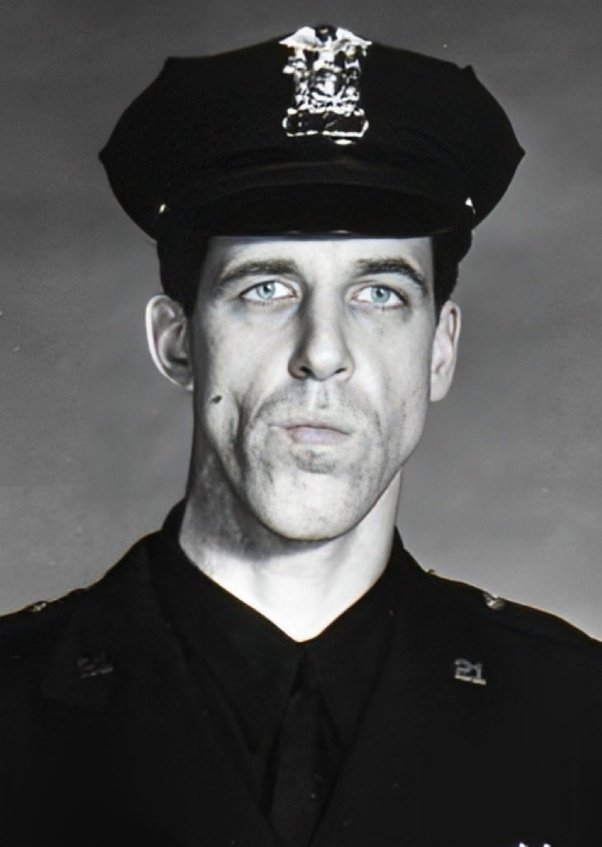
Long before Frederick Hubbard Gwynne became a household name for his unforgettable performances in Car 54, Where Are You? and The Munsters, he was a young man with a sharp mind, a deep voice, and a sense of duty that led him into the heart of World War II.
Born on July 10, 1926, in New York City, Gwynne grew up in a creative household. His father was a stockbroker, and his mother an accomplished artist, and from an early age, Frederick showed both intellectual curiosity and artistic flair. But like many young men of his generation, his life was soon swept up by the global conflict of the 1940s.
A Young Sailor in a Global War
Before he even turned 20, Gwynne enlisted in the United States Navy. The world was at war, and America’s forces were pushing across the Pacific toward Japan. Gwynne was assigned to the submarine chaser USS Manville (PC-581), a small but nimble vessel designed to hunt down enemy submarines and protect Allied ships from underwater attack.
Serving as a radioman, Gwynne held a position of immense responsibility. He spent long hours in cramped quarters, surrounded by the hum of equipment, intercepting and transmitting coded messages that carried vital orders and intelligence. Much of the information he handled was top secret—communications that could determine the success or failure of an operation.
The Manville and its crew saw action in some of the fiercest campaigns of the Pacific theater. In 1944, the ship supported Allied landings during the Battle of Saipan and the Battle of Tinian, both critical steps in the island-hopping strategy that brought U.S. forces closer to Japan. The work was dangerous and exhausting—enemy aircraft, submarines, and coastal guns were constant threats—but Gwynne performed his duties with quiet professionalism.
From the Navy to the Stage
When the war ended, Gwynne was honorably discharged in 1948. Like many veterans, he returned home with a new sense of purpose. He enrolled at Harvard University, where his talents blossomed in multiple directions. At Harvard, he joined the Hasty Pudding Theatricals and the Harvard Lampoon, sharpening both his comedic instincts and his artistic sensibilities.
After college, Gwynne began pursuing acting seriously. His tall frame—he stood at an imposing 6 feet 5 inches—and his distinctive baritone voice quickly set him apart. He found early work in theater before landing roles on television.
A Television Star is Born
In the early 1960s, Gwynne starred as Officer Francis Muldoon in the hit sitcom Car 54, Where Are You? His performance as the earnest, slightly bumbling police officer showcased his natural comic timing and charm. But his most iconic role was yet to come.
In 1964, Gwynne was cast as Herman Munster, the lovable, Frankenstein-like patriarch of The Munsters. Despite the heavy makeup and costume, Gwynne infused Herman with warmth, humor, and a touch of melancholy that made the character instantly endearing. His booming laugh and heartfelt delivery turned what could have been a gimmick role into one of television’s most memorable performances.
Though The Munsters ran for only two seasons, it became a cult classic, cementing Gwynne’s place in entertainment history.
An Artist Beyond the Screen
Outside of acting, Frederick Gwynne was also a gifted artist and author. He illustrated and wrote several children’s books, including The King Who Rained and A Chocolate Moose for Dinner, filled with whimsical wordplay and clever illustrations. These books reflected the same intelligence and creativity that had carried him from the Navy’s radio room to Hollywood soundstages.
A Life of Character and Creativity
Frederick Gwynne continued acting well into his later years, appearing in films such as Pet Sematary (1989) and My Cousin Vinny (1992), where his role as the stern Judge Chamberlain Haller became another fan favorite.
When he passed away in 1993 at the age of 66, he left behind a legacy that was as diverse as it was enduring: sailor, scholar, artist, actor, and storyteller.
Few knew that behind Herman Munster’s green makeup stood a man who had once helped steer his ship through the perils of war, decoding messages that helped shape the course of history. But for those who knew his full story, Frederick Gwynne was proof that quiet courage and boundless creativity could coexist in one extraordinary life.


0 Comments