
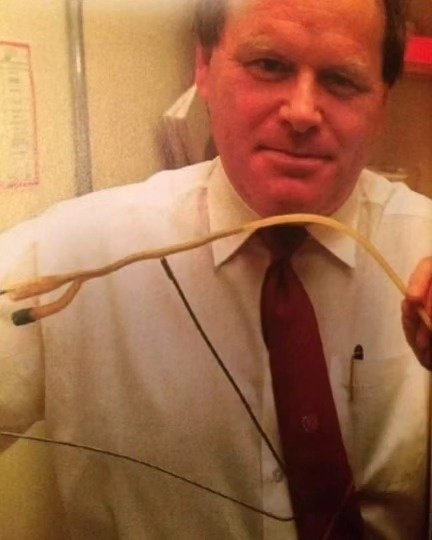
In 1995, Dr. Angus Wallace, a highly respected British orthopedic surgeon, was traveling on a commercial flight from Hong Kong to London. What began as a routine long-haul flight soon turned into a life-or-death emergency.
Earlier that same day, a woman named Paula Dixon had been involved in a motorcycle accident while on her way to the airport. She suffered injuries to her chest, including broken ribs, but despite the pain, she chose not to miss her flight and boarded the plane.
Several hours into the journey, while the aircraft was flying at an altitude of about 10 kilometers (35,000 feet), Paula suddenly developed severe chest pain and difficulty breathing. Her condition worsened quickly, and the flight crew made an urgent announcement asking if there was a doctor on board.
Dr. Wallace responded immediately. After examining Paula, he realized she was suffering from a tension pneumothorax—a dangerous condition in which a broken rib had punctured her lung, causing air to leak into her chest cavity. The trapped air was compressing her lung and pushing against her heart, a situation that can be fatal within minutes if not treated.
The problem was that they were in the air, far from any hospital, and there was no proper surgical equipment on board.
Thinking fast, Dr. Wallace improvised. Using a coat hanger, he fashioned a rigid instrument. He combined it with a catheter from the aircraft’s medical kit to create a makeshift chest tube. For sterilization and pain relief, the only alcohol available was a bottle of brandy from the drinks cart.
With the help of the cabin crew, Dr. Wallace performed an emergency chest decompression right there in the cabin. He inserted the tube into Paula’s chest, allowing the trapped air to escape. Almost immediately, her breathing improved, and her pain decreased. The life-threatening pressure on her lung and heart was relieved.
The aircraft continued its journey, and Paula survived the flight. She later received full medical treatment after landing.
After the intense procedure was over and Paula was stable, Dr. Wallace reportedly drank the remaining brandy and calmly remarked:
“I can tell I needed it.”
The incident became famous as a remarkable example of medical skill, quick thinking, and improvisation under extreme pressure, and Dr. Angus Wallace was widely praised for saving a life at 35,000 feet with nothing more than everyday items and his expertise.


0 Comments