
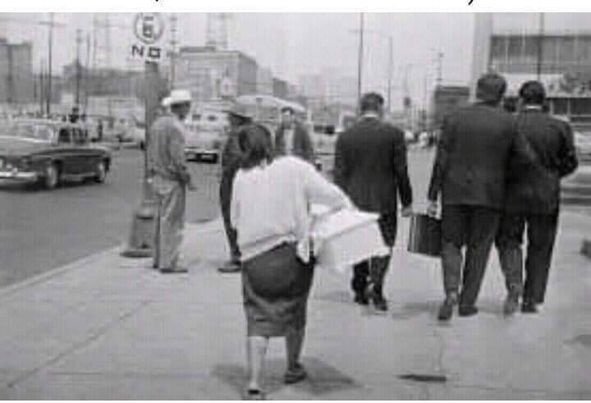
In March 1966, Mexican photographer Enrique Metinides captured a series of deeply emotional photographs that later became some of the most powerful images of his career.
They show a poor, heartbroken mother whose two-year-old daughter had been killed after being struck by a truck in Mexico City.
After the accident, the child was taken to a hospital. When the mother arrived and asked for her daughter’s body, the hospital staff told her they could not release it unless she brought a coffin.
They also told her to “think about it,” as though she might change her mind or simply give up.
But the woman was determined to take her daughter home.
The mother had almost no money. She lived in extreme poverty and had no relatives or resources to help her. Still, she refused to leave her child behind. She went out into the streets, walking from person to person, asking strangers if they could help her buy the smallest coffin possible.
For two long days, she begged for donations—under the sun, in the cold, carrying her grief alone.
Some people looked away. Others offered a few coins. Slowly, painfully, she gathered enough money.
Finally, she purchased a small white wooden coffin.
Metinides photographed her as she walked through the city carrying the coffin in her arms—no car, no help, only her determination and sorrow. Then, still by herself, she walked all the way to the hospital to retrieve her daughter’s body.
Once the hospital released the little girl to her, the mother began her final journey home.
She carried her daughter back to San Juan de Aragón, her small town located about 12 kilometers away.
She walked the entire distance alone, holding the coffin close to her chest.
The images Metinides captured show not only the unbearable grief of a mother but also the harsh indifference of a society where poverty determines even how one can mourn.
The story is remembered today as one of the most tragic and powerful examples of human love, suffering, and dignity in the face of neglect.


0 Comments