
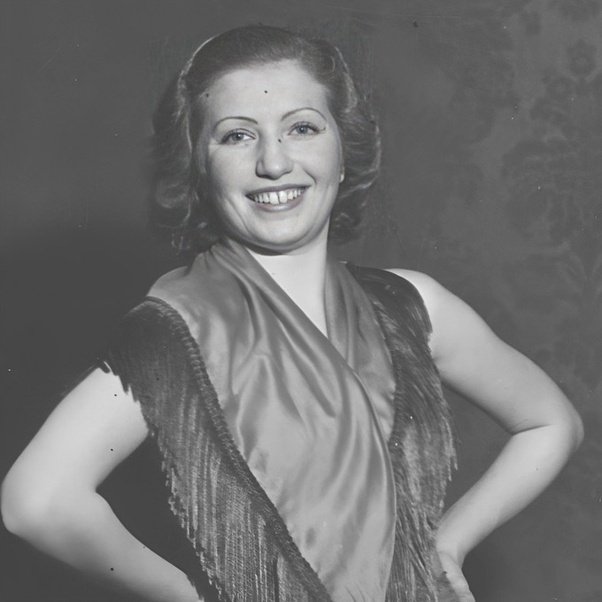
Franceska Mann (also spelled Franciszka or Frania Mann) was a young Polish-Jewish ballerina, regarded as one of the most talented dancers of her generation before World War II. In October 1943, she arrived at Auschwitz as part of a transport of Jews who had been tricked into believing they were being sent to a labor exchange in Switzerland.
The Situation in the “Sauna” Building
Upon arrival, Franceska and the other women from her transport were taken not to work, but to a building known as the “Sauna”, where they were ordered to undress under the false claim that they were going to be disinfected.
Inside the room were several SS guards, including:
- Josef Schillinger, an SS officer
- Wilhelm Emmerich, another guard
The guards were known for humiliating and abusing women during this process.
Franceska Mann’s Act of Resistance
According to survivor testimonies:
- Franceska began undressing slowly and deliberately, moving in a way that caught the guards’ attention and distracted them.
- As one of the guards approached her—possibly trying to assault her—Franceska used the moment to grab his pistol.
- She fired at Schillinger, hitting him and reportedly killing him.
- She then shot Emmerich, seriously wounding him.
This sudden act of resistance stunned everyone in the room, including the other women and the SS guards.
The Other Women Join the Fight
Franceska’s bravery sparked an immediate, desperate uprising among several of the other women:
- They rushed at the remaining guards with their hands and whatever objects they could reach.
- In the struggle, the women managed to injure several guards, including tearing at their faces and overpowering them briefly.
Accounts say that at least one guard was scalped and another seriously disfigured before SS reinforcements arrived.
The Aftermath
The fight was short-lived. Armed guards quickly surrounded the building. Franceska Mann and all the resisting women were shot and killed on the spot.
Though their revolt did not lead to escape or survival, it became one of the most famous individual acts of resistance by women inside Auschwitz.
Historical Notes
Franceska Mann is remembered as a symbol of courage, dignity, and defiance in one of the darkest places in history.
Exact details vary across testimonies, since no official Nazi record of the event was kept.
Most historians consider the core of the story credible, especially since multiple survivor accounts mention it.


0 Comments