
On June 10, 1990, British Airways Flight 5390 took off from Birmingham, England, heading to Málaga, Spain. About 13 minutes after takeoff, while the aircraft was climbing through 17,300 feet, a shocking and life-threatening event occurred.
The left cockpit windscreen panel suddenly blew out, causing an explosive decompression. The enormous change in pressure sucked Captain Tim Lancaster forward and halfway out of the aircraft. His torso was outside the plane, exposed to freezing temperatures, hurricane-force winds, and low oxygen, while only his legs remained inside the cockpit.
At that exact moment, flight attendant Nigel Ogden entered the cockpit. Seeing the captain being pulled out of the aircraft, he immediately rushed forward and grabbed Lancaster’s legs. The force of the wind was so strong that it pinned Ogden against the control panel, but he refused to let go.
Meanwhile, First Officer Alastair Atchison took control of the aircraft. With the cockpit door blown off and alarms sounding, he had to make a rapid emergency descent to reach breathable air while preparing to land the plane safely.
Ogden held onto the captain for more than 20 minutes. His hands grew numb and painful, and he suffered frostbite and injuries to his face and shoulder. Another flight attendant eventually came to help hold the captain’s legs while Ogden was pulled back to safety.
Throughout the ordeal, Lancaster’s body remained rigid in the freezing winds. Many feared he was already dead, but the crew continued to hold him to prevent his body from hitting the wings, engines, or tail—any of which could have caused catastrophic damage.
Against all odds, First Officer Atchison successfully landed the plane at Southampton Airport. Emergency crews rushed onboard, expecting the worst.
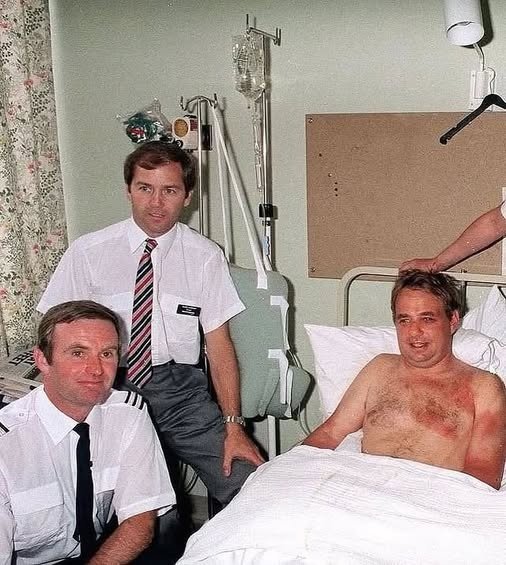
To everyone’s shock, Captain Lancaster was still alive. Although he suffered severe frostbite, fractures in his arms and hands, and shock, he made a full recovery. Nigel Ogden, who had risked his life to save him, required treatment for frostbite, a dislocated shoulder, and facial injuries.
An investigation later revealed that the windscreen had been fitted with incorrectly sized bolts during maintenance, leading to the terrifying failure.
Why the Story Is Extraordinary
- The captain survived being partially outside a plane at 17,000 feet.
- A flight attendant held onto him for over 20 minutes in extreme conditions.
- The copilot landed the aircraft safely despite massive stress and damage.
- No passengers died, and the aircraft landed intact.


0 Comments