
Before and during World War II, Japan’s military culture was shaped by Bushidō — the ancient “way of the warrior.” It emphasized loyalty, courage, and, above all, honor.
In that mindset, surrender was seen as the ultimate shame. Japanese soldiers were taught that death was preferable to capture. This belief had terrible consequences — not only for Japanese soldiers themselves, who often chose suicide over surrender, but also for enemy soldiers who were captured.
Because Japanese troops saw prisoners as cowards who had disgraced themselves, POWs were treated with extreme cruelty.
2. The Reality of Japanese POW Camps
When Allied soldiers — British, American, Australian, Dutch, and others — were captured, they were often sent to forced-labor camps across Asia. One of the most infamous projects was the Burma–Thailand Railway, sometimes called the Death Railway.
- Work conditions: Men worked 12–18 hours a day, often barefoot, with little food or water.
- Punishments: Beatings were constant. Some were executed for the smallest acts of defiance.
- Deaths: Over 100,000 people died, including thousands of Allied prisoners and tens of thousands of Asian laborers.
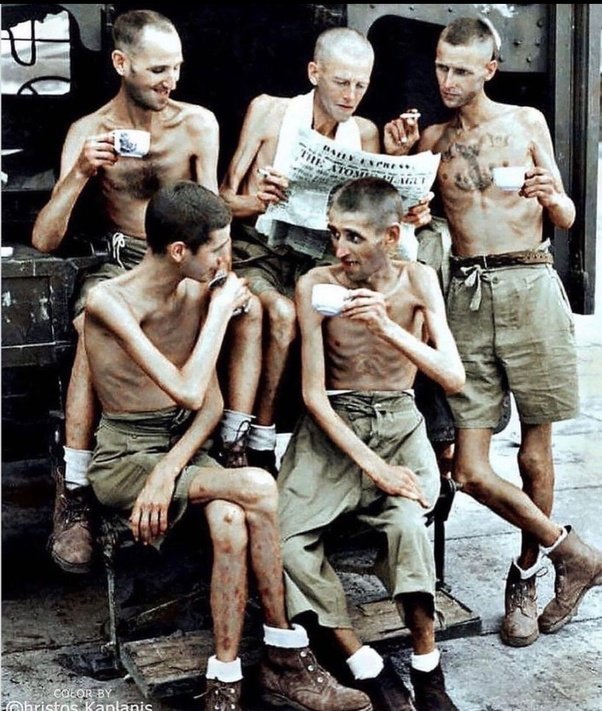
Survivors returned home emaciated, sick, and deeply traumatized — like the man you described, who came back “a living skeleton with a permanent expression of pain.”
3. After Japan’s Defeat — Anger and Reconstruction
When World War II ended in August 1945, many Americans and Allied soldiers were furious at Japan for its brutal conduct.
The Tokyo War Crimes Trials (1946–1948) punished Japanese leaders for war crimes. Several officers responsible for POW mistreatment were executed or imprisoned.
However, despite this bitterness, Japan and the United States soon began to rebuild relations. Under U.S. occupation (1945–1952), Japan adopted democracy, rebuilt its economy, and renounced war. Over time, the two nations became close allies, especially during the Cold War when both opposed the spread of communism in Asia.
4. Remembering the Suffering
Even though Japan and the U.S. are strong allies today, the memory of wartime cruelty has never completely faded. Survivors of POW camps carried physical and emotional scars for the rest of their lives.
Historians and museums continue to document these atrocities so that they are never forgotten. Many Japanese people today also acknowledge and mourn the suffering caused by their country’s wartime actions — something that took decades of reflection and education to achieve.
5. In Summary
- Japan’s wartime ideology led to brutal treatment of POWs.
- Many prisoners suffered and died under horrific conditions.
- After the war, there was deep anger, but also a remarkable reconciliation between Japan and the U.S.
- Today, the focus is on remembering history honestly to prevent such cruelty from happening again.


0 Comments