
⚖️ Background
Marianne Bachmeier was born in 1950 in Lübeck, West Germany. She became known across the world in 1981 for committing an extraordinary act inside a courtroom — something that was both condemned and sympathized with in equal measure.
She was a young mother raising her only daughter, Anna, who was just 7 years old in 1980. Marianne and Anna had a close, loving relationship, though Marianne’s early life had been difficult — her father was reportedly strict and sometimes violent, and her marriage had ended in divorce. Despite struggles, she adored her daughter.
🕊️ The Murder of Anna Bachmeier (1980)
In May 1980, Anna had an argument with her mother and decided to skip school. She never came home.
That same day, she was abducted by a 35-year-old man named Klaus Grabowski, a known sex offender and pedophile who had previously been convicted of abusing children. He was under hormone treatment (chemical castration) but had reportedly stopped taking his medication.
Grabowski lured Anna into his home with the promise of showing her kittens. What happened next was horrifying — he strangled Anna with her own stockings after keeping her captive for several hours. With the help of his girlfriend, he put her body in a box and left it by a canal.
When police found Anna’s body, the nation was stunned. Grabowski was quickly arrested. During interrogation, he claimed that Anna had tried to “blackmail” him, saying she threatened to tell people he had touched her unless he gave her money — a statement that enraged Marianne when she later heard it in court.
⚔️ The Courtroom Shooting (March 6, 1981)
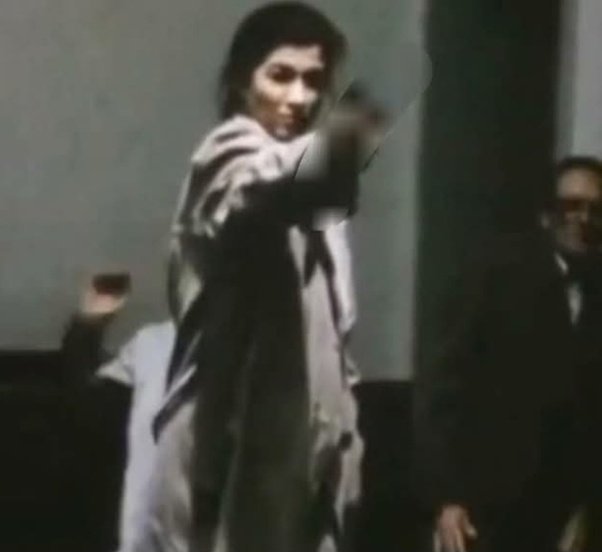
During Grabowski’s trial in Lübeck, Marianne attended one of the sessions. She brought with her a .22-caliber Beretta pistol, hidden in her handbag.
As Grabowski sat only a few meters away, calmly describing what had happened and repeating that Anna had tried to “blackmail” him, Marianne snapped.
At that moment, she stood up, pulled out her gun, and fired seven times — six bullets hit Grabowski. He died instantly, right there in the courtroom.
Witnesses were in shock. Reporters later described the scene as absolute chaos. Some shouted, some screamed, while others simply froze in silence.
🚨 After the Shooting
Marianne was immediately arrested. When officers took her away, she reportedly said:
“Leider habe ich ihn nur von hinten erwischt.”
(“Unfortunately, I only got him from behind.”)
Her act divided Germany. Many saw her as a mother driven beyond reason by unbearable grief. Others argued that justice should never be taken into one’s own hands, no matter how tragic the situation.
⚖️ Her Trial and Sentence
Marianne Bachmeier’s trial began in 1983. The court had to decide: was this cold-blooded murder or an act of emotional desperation?
Psychologists testified that she acted under severe emotional distress. In the end, she was not convicted of murder, but of manslaughter and unlawful possession of a firearm.
She was sentenced to six years in prison, but served only three years before being released.
🌅 Life After Prison
After her release, Marianne tried to rebuild her life away from the media. She later moved to Nigeria with a new partner, then returned to Germany. In the 1990s, she was diagnosed with cancer.
Before her death, she gave a rare interview in 1996 to a German TV station, openly reflecting on her actions:
“I did it for my child. I couldn’t bear hearing him talk about her like that.”
Marianne Bachmeier died in 1996 at the age of 46.
💔 Legacy
Her case remains one of the most emotionally charged in German legal history. It raised difficult questions about justice, revenge, and grief:
- Was she a murderer — or a mother who simply couldn’t bear the pain anymore?
- Should the justice system account for emotions that powerful?
Many still view her not as a criminal, but as a symbol of a mother’s unimaginable sorrow and fury.


0 Comments