
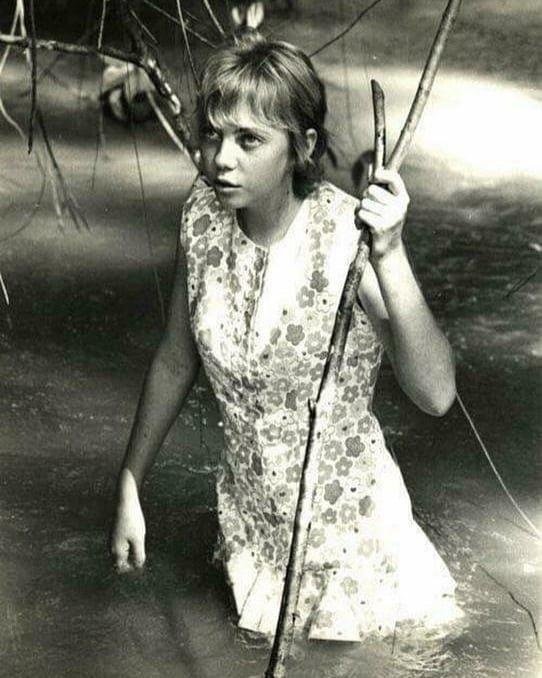
On December 24, 1971, a 17-year-old German-Peruvian girl named Juliane Koepcke boarded LANSA Flight 508 in Lima, Peru, along with her mother, Maria Koepcke. They were traveling to Pucallpa, where her father — a biologist — was working at a research station in the Amazon rainforest.
It was supposed to be a short flight, less than an hour long. The passengers were in a festive mood — it was Christmas Eve, and Juliane was excited to see her father. But about half an hour after takeoff, disaster struck.
The Lightning Strike
As the plane flew over the dense Amazon jungle, it entered a powerful thunderstorm. Turbulence shook the aircraft violently. Lightning flashed all around them. Then, suddenly, a bolt of lightning struck the plane’s right wing.
Juliane remembered a bright flash — and then the plane began to break apart in mid-air. The next thing she knew, she was falling — still strapped to her seat — from an altitude of about 10,000 feet (over 3 kilometers / 2 miles).
The Fall
Somehow, against all odds, Juliane survived the fall. The thick canopy of the Amazon rainforest may have slowed her descent, and the seatbelt possibly cushioned the impact.
When she regained consciousness, she was lying on the jungle floor. Her collarbone was broken, one of her eyes was swollen shut, and she had deep cuts and wounds infested with dirt. She was bruised and dazed — but alive.
Alone in the Jungle
Juliane realized she was the only survivor. She searched the crash site for her mother and other passengers, but found only wreckage. She had no supplies — only a small bag of candy she found among the debris.
Drawing on her childhood — growing up in the jungle with her biologist parents — Juliane knew how dangerous the rainforest could be. She remembered her father’s advice: “If you get lost, follow water.” So she began walking along a small stream, believing it would eventually lead her to civilization.
Ten Days of Survival
For ten days, Juliane wandered through the dense Amazon, surrounded by insects, snakes, and crocodiles. She had no shoes and wore only a torn dress. At night, she shivered in the rain. During the day, she endured unbearable heat and hunger.
Her wounds soon became infected, and maggots began to grow inside a deep gash on her arm. Then, on the tenth day, she made a miraculous discovery — a small boat tied near a riverside shelter.
The Gasoline Cure
Inside the shelter, Juliane found a can of gasoline. She remembered her father once saying that gasoline could kill maggots in animal wounds. Desperate, she poured the fuel over her infected arm. It was excruciatingly painful — but it worked. The maggots fell out, and the infection began to heal.
Too weak to travel any farther, she decided to rest there.
Rescue
The next morning, some local lumber workers arrived at the shelter. They were astonished to find a pale, injured teenage girl alone in the middle of the jungle. They treated her wounds, gave her food, and then took her by canoe to a nearby village.
From there, Juliane was airlifted to safety and reunited with her father — the only surviving member of her family. Tragically, her mother’s body was found a few days later.
Aftermath and Legacy
Juliane Koepcke’s story became world-famous. She went on to study biology, following in her parents’ footsteps, and later earned a PhD in zoology. She eventually returned to the site of the crash for a documentary titled “Wings of Hope”, directed by Werner Herzog — who, by a strange coincidence, had once planned to be on that very same flight.
Today, Juliane’s survival is considered one of the most incredible true stories of human endurance and resilience in history.


0 Comments