
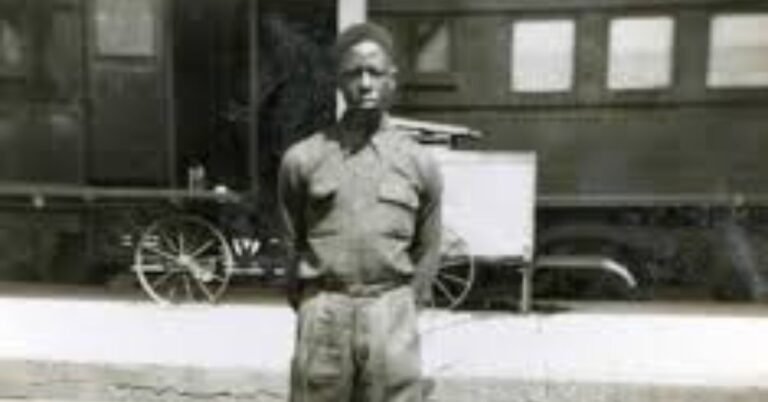
It was 1952 in Mobile, Alabama. An 18-year-old young man stood at the train station, a small bag by his foot, a few dollars in his pocket, and big dreams in his heart. His name was Henry Louis Aaron — “Hank” to most people. He was leaving home for the first time, headed north to chase something that seemed impossible for a Black boy from the Deep South: a career in professional baseball.
In his pocket: $1.50.
In his bag: two changes of clothes.
And if you knew Southern mamas, you could bet there were some sandwiches and snacks tucked away, too.
That train was bound for Indianapolis, Indiana, where Hank was set to join the Indianapolis Clowns, a team in the Negro American League. It wasn’t glamorous — the players rode buses for hours, slept in cheap motels (if they were allowed to stay at all), and played in small towns where segregation laws were harsh. But for Hank, it was a start.
The Negro Leagues and a Rising Star
Hank Aaron didn’t stay a “rookie” for long. His swing — quick, smooth, and powerful — drew attention everywhere he played. With the Clowns, he hit so well that scouts from the Boston Braves took notice. (Back then, they were still in Boston before moving to Milwaukee, and eventually Atlanta.)
In 1952, the Braves signed Hank to a contract — he was just 18 years old.
Breaking Barriers in the Minors
Aaron joined the Eau Claire Bears and later the Jacksonville Braves, both minor league affiliates. In Jacksonville, Florida, he became one of the first Black players in the Sally League (South Atlantic League). The racism he faced was brutal — slurs from the stands, segregated hotels, restaurants that refused to serve him.
But Hank’s bat did the talking. He led the league in almost every offensive category, winning the Most Valuable Player award. The message was clear: Hank Aaron wasn’t just good — he was destined for greatness.
The Big Leagues: Milwaukee Braves
In 1954, Hank Aaron made his Major League debut with the Milwaukee Braves. From that moment, he became one of the most consistent and feared hitters in baseball history.
Over the next two decades, he built a career defined by grace, power, and perseverance.
- 25 All-Star selections
- 3 Gold Gloves
- 2-time batting champion
- 1957 National League MVP
- Led his team to a World Series championship that same year
He never hit 50 home runs in a season, but he hit 30 or more for 15 seasons straight — a model of consistency and discipline.
Chasing the Babe: The Home Run Record
By the early 1970s, Hank Aaron was closing in on one of the most sacred records in all of sports: Babe Ruth’s 714 career home runs.
But with the chase came hatred. As a Black man in the South, Hank received death threats and racist letters — thousands of them. He had to travel with security. He feared for his family’s safety. Yet through it all, he kept playing with dignity and quiet strength.
On April 8, 1974, at Atlanta-Fulton County Stadium, Hank Aaron stepped up to the plate against the Los Angeles Dodgers’ pitcher Al Downing. In the fourth inning, he swung — and sent the ball soaring over the left-center field fence.
Home run number 715.
He had broken Babe Ruth’s record.
As he rounded the bases, two young fans ran onto the field to shake his hand — a moment of spontaneous joy and unity that symbolized everything Hank stood for.
A Legacy Beyond Numbers
Hank Aaron retired in 1976 with 755 home runs, a record that stood for 33 years until Barry Bonds broke it in 2007. But numbers can’t capture what Hank Aaron meant to the game — or to America.
He was a quiet trailblazer who carried the weight of history on his shoulders with grace. After his playing days, he became an executive with the Atlanta Braves, eventually serving as Senior Vice President — still connected to the game he loved until the end of his life.
Even today, his number 44 is retired, and a section of the old Atlanta-Fulton County Stadium wall still stands — exactly where he hit that record-breaking home run.
The Man Behind the Legend
Off the field, Hank Aaron was just as remarkable. He was a champion for civil rights, a philanthropist, and a mentor to young players. He believed in the power of opportunity — the same opportunity he got when he stepped on that train back in 1952.
He passed away in January 2021, but his legacy lives on — not just in the stats, but in the inspiration he gave to generations of athletes and dreamers.
From $1.50 to Immortality
From a young man with $1.50 in his pocket at a train station in Mobile, Alabama…
To one of the most respected and accomplished figures in baseball history…
Henry “Hammerin’ Hank” Aaron showed what it means to dream big, work hard, and never give up, no matter the odds.
⚾️ 755 Home Runs.
❤️ One Unforgettable Life.


0 Comments